

Cart
0
Table of Contents
- Synthetic vs Down Sleeping Bags for Expeditions: The Core Trade-Off
- Synthetic vs Down Sleeping Bags for Expeditions: Quick Comparison
- Sleeping Bag Temperature Ratings Explained: What the Numbers Actually Mean
- Sleeping Bag Weight vs Warmth Ratio: Where Ounces Come From
- Performance in Wet Conditions: Hydrophobic Down vs Synthetic Fibers
- How to Clean a Down Sleeping Bag (and Keep Synthetic Fill Alive)
- Cost, Durability, and Sustainability: What You Pay For Over Time
- Which Bag Fits Your Expedition? A Decision Framework
- Frequently Asked Questions
Last Updated: September 16, 2026
Synthetic vs Down Sleeping Bags for Expeditions: The Core Trade-Off
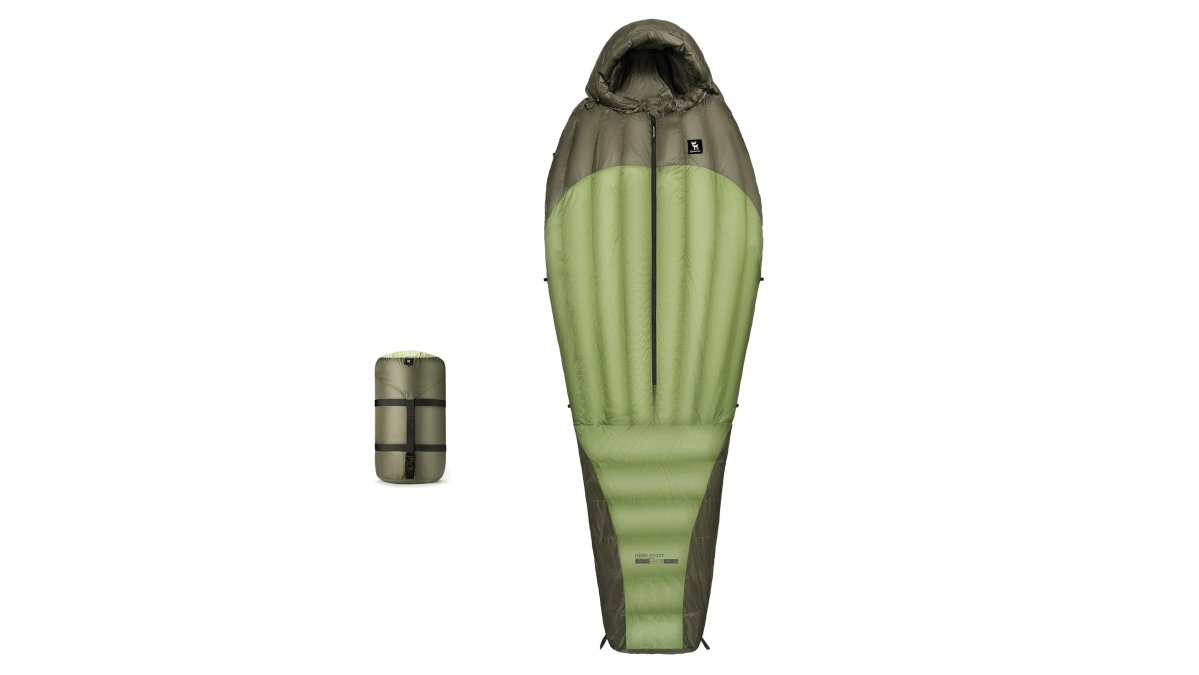
The synthetic vs down decision comes down to one question: what will your insulation do when it gets wet? Down delivers the best warmth-to-weight ratio of any fill, but loses most of its insulating power once moisture saturates the clusters. Synthetic fill keeps trapping heat even when damp, which is why expedition planners treat this as a risk calculation rather than a comfort comparison. This guide breaks down fill power, loft, moisture behavior, and pack weight so you can pick the right bag for your route.

How Fill Power and Loft Decide Warmth
Fill power measures how many cubic inches one ounce of down occupies, so higher numbers mean more loft per gram. Loft is the thickness of that expanded fill, creating the dead air space your body heats. More loft equals more warmth, and down reaches a given loft with less fill weight than any synthetic fiber.
Moisture, Condensation, and Insulation Degradation
Condensation is the quiet killer on multi-day trips. Your body releases moisture overnight, and in a single-wall tent that vapor has nowhere to go. Down absorbs it and collapses. Synthetic fibers shed water and keep their structure, so a damp synthetic bag still holds most of its warmth. That difference decides whether a wet night is uncomfortable or dangerous.
Synthetic vs Down Sleeping Bags for Expeditions: Quick Comparison
Here's the short version before the details. Down wins on weight and pack volume, synthetic wins on moisture tolerance and price.
| Factor | Down | Synthetic |
|---|---|---|
| Warmth-to-weight | Best available | Heavier for same warmth |
| Wet performance | Loses loft when soaked | Retains most warmth |
| Packability | Compresses very small | Bulkier |
| Lifespan | 10+ years with care | Shorter, loft flattens |
| Cost | Higher upfront | Lower upfront |
| Best For | Cold, dry, weight-critical trips | Wet, humid, budget trips |
Key Takeaway
Match the fill to your wettest expected night, not your coldest. A dry-cold down bag beats synthetic every time, but a soaked down bag is a survival problem.
Sleeping Bag Temperature Ratings Explained: What the Numbers Actually Mean
Temperature ratings are test results, not guarantees. A bag rated for a given temperature assumes a base layer, a proper sleeping pad, and a tent. Change any of those and the real-world limit shifts.
Sleeping bag temperature ratings explained simply: the comfort rating is the temperature at which an average woman sleeps comfortably, while the limit rating is the lower threshold for an average man. Most manufacturers print the limit number because it looks more impressive. Buy to the comfort rating for the conditions you expect.

EN/ISO Testing Standards and the Comfort vs Limit Gap
EN/ISO testing uses a heated mannequin in a controlled lab to produce comparable numbers across brands. The gap between comfort and limit ratings can run 10 to 15 degrees, so always check which rating the brand is quoting.
Sleeping Bag Weight vs Warmth Ratio: Where Ounces Come From
The sleeping bag weight vs warmth ratio is where down separates itself. To hit the same temperature rating, a synthetic bag typically weighs more and packs larger. On a long carry, that penalty compounds with every mile.

Pack Volume, Compressibility, and the Weight Penalty of Synthetics
Compressibility determines how much of your pack the bag eats. Down compresses to roughly half the packed volume of synthetic fill at the same rating. The weight penalty of synthetics shows up twice: heavier on your back and bulkier in your pack, pushing other gear to the outside.
For context, our Kamperbox Winter Sleeping Bag uses 800+ fill power RDS-sourced duck down at 1.43 kg total weight for a -25°C to -30°C range.
Performance in Wet Conditions: Hydrophobic Down vs Synthetic Fibers
Watch Out
A "water-resistant" shell fabric on a down bag is not the same as water-resistant down. Shell DWR sheds rain and condensation from outside; it does nothing for the moisture your body produces inside the bag. Both matter, and they solve different problems.
Field-repair reality check. A torn synthetic bag can be patched with duct tape, Tenacious Tape, or a strip of pack fabric and will keep insulating because the fill is a continuous batt. A torn down bag loses clusters through even a pinhole, and every cluster that escapes is loft you never get back. Carry a proper patch kit and treat any puncture as urgent, on a multi-week expedition, a small tear can become a cold-weather problem within a few nights.
Kamperbox Winter Sleeping Bags Camping →
How to Clean a Down Sleeping Bag (and Keep Synthetic Fill Alive)
Knowing how to clean a down sleeping bag protects your investment.
Loft Recovery, Storage, and Repairability in the Field
Loft recovery measures how well a bag bounces back after compression.
Cost, Durability, and Sustainability: What You Pay For Over Time
Down costs more upfront but lasts longer, often a decade or more with proper care.
Which Bag Fits Your Expedition? A Decision Framework
Most guides reduce this to "down for cold and dry, synthetic for wet." That advice is correct and useless the moment your route crosses more than one climate zone.
Step 1: Identify your wettest expected night, not your coldest
Write down the worst moisture scenario your route can produce: a river crossing on day three, a week of coastal fog, a tent that ices up inside from condensation.
Step 2: Score the route on four axes
- Moisture exposure, dry, humid, or actively wet (rain, river crossings, snow melt)
- Duration, weekend, one to two weeks, multi-week or unsupported
- Weight sensitivity, how many miles per day and how much vertical
- Temperature floor, the coldest expected overnight low, not the average
Step 3: Match the fill to the score
| Route profile | Recommended fill | Why |
|---|---|---|
| Cold, dry, weight-critical | High fill-power down (800+) | Best warmth-to-weight, smallest pack |
| Cold, dry, but multi-week | Down with hydrophobic treatment | Buffers body vapor over long trips |
| Wet, humid, any duration | Synthetic or hybrid | Reliable when damp, field-repairable |
| Mixed climates, one bag | Hybrid (down core + synthetic zones) or down + synthetic overquilt | Covers both failure modes |
| Budget or beginner | Synthetic | Lower upfront cost, forgiving care |
| Family or car camping | Either | Comfort and size outweigh grams |
Step 4: Plan for the failure mode you can't avoid
- Down bag: carry a patch kit, a dry bag for storage inside your pack, and a plan to dry the bag in sun or a hut whenever the opportunity appears.
- Synthetic bag: accept that loft will degrade over the trip, and consider a slightly warmer rating than you think you need to compensate.
- Hybrid system: the down core stays dry, the synthetic outer layer takes the condensation, and you can swap or remove layers as conditions change.
Step 5: Consider the micro-climate swing
Pro Tip
On any expedition where you cannot guarantee a dry night, the question is not "down or synthetic" but "what is my plan when the bag gets wet." A down bag plus a synthetic overquilt plus a patch kit is a more honest answer than pretending the weather will cooperate.
For families and casual campers, our Four Seasons Universal Sleeping Bag comes in four thickness options from 1.1 kg to 2 kg, covering spring through winter without committing to a single rating.
Frequently Asked Questions
Is down or synthetic better for wet conditions?
Synthetic fill wins in sustained wet conditions. Polyester fibers absorb very little water and keep trapping dead air space even when damp, so you stay warmer. Down loses loft when soaked, which collapses the air pockets that hold heat. Hydrophobic down, like the DWR-treated 800FP duck down in the Kamperbox MP8000, resists moisture far better than untreated down, but it still is not fully waterproof. For multi-day rain or river crossings, synthetic is the safer call.
How much weight does a down sleeping bag save compared to synthetic?
Down typically saves 30 to 50 percent of the bag's weight for the same warmth. The Kamperbox MP8000, for example, uses 890g of 800FP duck down and weighs 1.43kg total while rated to -25°C. A synthetic bag with comparable warmth would weigh noticeably more and pack larger. That weight penalty matters most on long backpacking trips where every ounce in your pack adds up over miles.
Do synthetic sleeping bags lose warmth over time?
Yes, but slowly. Synthetic fibers gradually lose loft recovery as repeated compression breaks down the structure, and insulation migration can create cold spots over years of use. Most synthetic bags hold usable warmth for several seasons. Down, by contrast, can last decades if cleaned and stored properly, since loft recovery is much higher. The trade-off is that down costs more upfront and needs more careful maintenance.
What is the fill power rating in down sleeping bags?
Fill power measures how many cubic inches one ounce of down occupies. A 650FP bag, like the 650 Fill Power Down Sleeping Bag, lofts less than an 800FP bag. Higher fill power means more warmth per ounce and better compressibility. For expeditions, 650FP works well for 23°F to 41°F comfort ranges, while 800FP and above suits sub-zero temperatures and ultralight packing. Fill power does not measure warmth directly, but it tells you how efficiently the down traps dead air space.
How do you properly store a down sleeping bag?
Store down loosely in a large cotton or mesh storage sack, never in the compression stuff sack. Compressing down for months crushes the loft and slows loft recovery. Keep it in a cool, dry place away from direct sunlight. Before storing, make sure the bag is completely dry to prevent mildew and insulation degradation. Following this routine, along with proper cleaning, extends the lifespan of a down bag to a decade or more.

