Cart
0
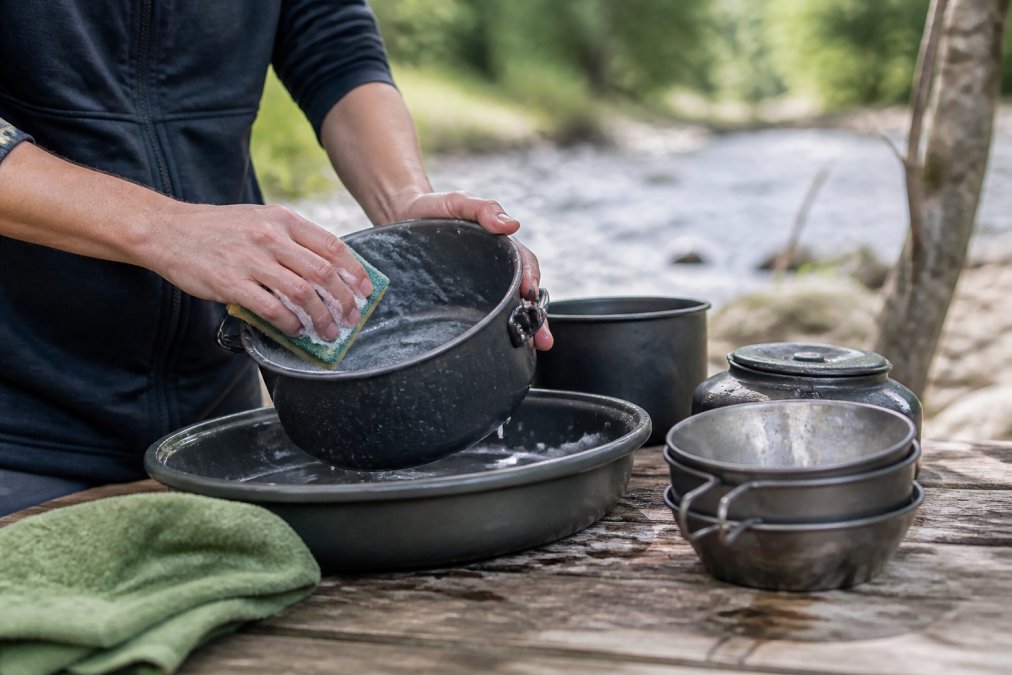
Table of Contents
- What You'll Need to Clean Camping Cookware
- Camping Dishwashing Station Setup
- How to Remove Burnt Food from Camping Pots
- Cleaning Methods for Stainless Steel, Titanium, and Cast Iron
- Best Biodegradable Soap for Camping
- Cleaning Without Soap or Running Water
- Post-Trip Deep Cleaning and Rust Prevention
- Conclusion
- Frequently Asked Questions
Last Updated: September 23, 2026
What You'll Need to Clean Camping Cookware
Cleaning durable camping cookware starts with a small, simple kit. You do not need a full kitchen setup in the woods. A scraper, a scrubber, a little soap, and clean water handle almost every mess.
Pack these items before your trip:
- A nylon scraper or plastic spatula for food residue
- A scouring pad or sponge (non-scratch for coated pans)
- A small bottle of biodegradable dish soap
- A packable wash basin or two collapsible tubs
- A clean towel or microfiber cloth for drying
- A sealable bag for dirty gear
The right tools matter as much as the method. Harsh abrasives can scratch a non-stick coating or strip the seasoning off cast iron. Soft tools clean just as well when you let hot water and soaking do the heavy lifting.

GreatAdventureSupply carries cookware sets built for this kind of care, so you can clean fast and get back to the trail.
Pro Tip
Bring a dedicated scraper just for your cookware. Using a knife to scrape a pan is one of the fastest ways to ruin a non-stick surface.
Camping Dishwashing Station Setup
A good camping dishwashing station setup has three zones: wash, rinse, and dry. Set them up on a flat surface away from your tent and away from any water source.
Here is a simple three-basin system:
- Wash basin with hot water and a few drops of biodegradable soap
- Rinse basin with clean water
- Dry zone with a towel laid flat
Heat water on your camp stove, not over an open fire, so you can control the temperature. Boiling water loosens grease and charred food fast.
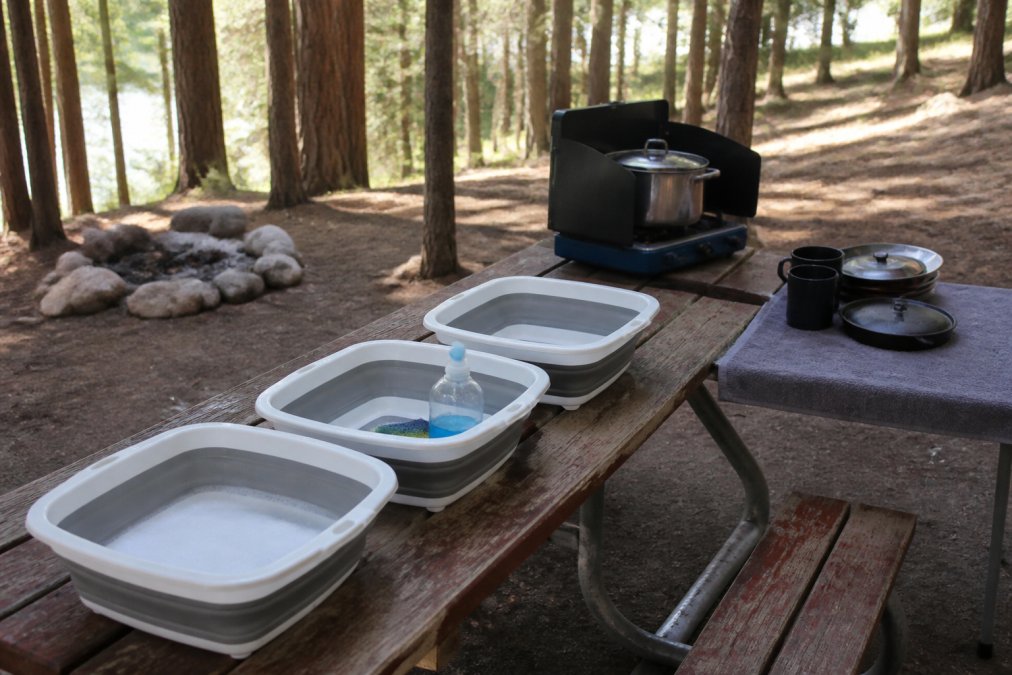
Keep the station at least 200 feet from streams, lakes, and trails. This follows Leave No Trace guidance for backcountry and wilderness areas. A Leave No Trace seven principles explains why scattering dirty water matters.
The NatureHike 8.5L folding wash basin is a smart pick for this. It folds flat, holds plenty of water, and doubles as a gear rinse tub. Grab one at GreatAdventureSupply for $17.52.
How to Remove Burnt Food from Camping Pots
Learning how to remove burnt food from camping pots comes down to one rule: soften it before you scrub it. Dry scraping a charred pan scratches the surface and wastes effort.
Try this sequence:
- Fill the pot with water and a drop of dish soap.
- Bring it to a boil on the camp stove.
- Let it simmer for five to ten minutes.
- Scrape gently with a nylon tool.
- Rinse and repeat if residue remains.
For stubborn charred food, add a handful of sand or fine ash as a mild abrasive. This natural abrasive trick works well on stainless steel and cast iron. Skip it on non-stick coatings.

Watch Out
Never scrape a hot pan with metal. The scratch you leave behind becomes a spot where food sticks forever, and on coated pans it can flake the surface.
Cleaning Methods for Stainless Steel, Titanium, and Cast Iron
Each material needs its own approach. Using one method on every pan is how gear gets ruined. The biggest mistake campers make is treating all non-stick coatings the same.
Stainless steel is the toughest of the common materials. It handles hot water, soap, and a scouring pad without complaint. Soak it, scrub it, rinse it, done. Avoid long soaks with acidic foods like tomato sauce, which can pit the surface over time.
Titanium is light and corrosion-resistant but scratches easily. Use a soft sponge and warm water. Avoid abrasive pads and powdered cleansers, they dull the finish and can leave micro-scratches that trap food.
Cast iron needs the opposite of soap. Scrub it with hot water and a stiff brush, then dry it fully on the stove and re-oil it while still warm. This is called seasoning, and it protects the metal from rust. If rust does appear, scrub it off with steel wool, rinse, dry, and re-season in thin layers.
Hard-anodized aluminum sits in the middle. The anodized layer is hard and light, but it can wear through with harsh scrubbers. Clean it with mild soap and a soft cloth. Never use metal tools on it.
304 Stainless Steel 5-Piece Camping →
Teflon (PTFE) non-stick is the most fragile coating. The PTFE layer releases food because it is chemically inert, but it scratches easily and degrades above roughly 500°F when overheated empty. Clean it only after it has cooled. Use a soft sponge, warm water, and a drop of mild soap. Never use metal utensils, steel wool, or abrasive cleansers. If the coating flakes or scratches down to the metal, the pan is done, flaking PTFE should not be ingested.
Ceramic non-stick (often marketed as 'green' or 'mineral' coatings) is silica-based and free of PTFE and PFOA. It handles slightly higher heat than Teflon but loses its release properties faster, often within a year of regular use. Clean it with warm water and a soft sponge. Avoid sudden temperature changes (like plunging a hot pan into cold water), which can crack the coating. Do not use oil sprays, which bake onto ceramic and leave a sticky film.
| Material | Best Cleaning Method | Avoid |
|---|---|---|
| Stainless steel | Hot water, soap, scouring pad | Long soaks with acidic foods |
| Titanium | Warm water, soft sponge | Abrasive pads, powdered cleansers |
| Cast iron | Hot water, brush, re-oil while warm | Dish soap, air drying |
| Hard-anodized aluminum | Mild soap, soft cloth | Metal tools, harsh scrubbers |
| Teflon (PTFE) | Cool first, soft sponge, mild soap | Metal tools, high heat, abrasives |
| Ceramic non-stick | Warm water, soft sponge | Thermal shock, oil sprays, abrasives |
Watch Out
Never scrape a hot non-stick pan with metal.
The Ultra-Light Aluminum Camping Cookware Set from GreatAdventureSupply uses hard alumina.

Best Biodegradable Soap for Camping
The best biodegradable soap for camping is one labeled for outdoor use and free of phosphates, dyes, and synthetic fragrances. It breaks down faster in soil and puts less strain on the environment, but 'biodegradable' is not a license to dump it in a lake.
Biodegradable soaps are designed to break down in soil, where microbes can process them. In water, the same soap is still a surfactant. It lowers surface tension, which lets it penetrate the waxy coating on fish gills and aquatic insects, and it can carry oils and food particles into the water column.
A few things to know:
- Biodegradable does not mean safe in water. Soap still harms fish, amphibians, and aquatic plants, even at low concentrations.
- Use it sparingly. A few drops go a long way. Most campers use far more than they need.
- Strain first, then scatter. Remove food particles with a scraper and pack them out in a sealable bag. Then scatter the remaining wash water widely on dry ground, at least 200 feet from any water source, trail, or campsite.
- Never rinse dishes directly in a stream or lake. Even a quick dunk leaves soap residue and food waste behind.
- Pack out what you can. In heavily used areas, some land managers prefer that you pack out all gray water rather than scatter it.
Even eco-friendly cleaners affect water quality when concentrated.
Key Takeaway
Biodegradable soap breaks down in soil, not water. Strain your food bits, pack them out, and scatter the gray water on dry ground far from any water source.
If you want to skip soap entirely, see the next section on cleaning without soap or running water.
Cleaning Without Soap or Running Water
You can clean cookware with no soap and no running water. It takes a little more patience, but it works.
For scrubbing, use what the land gives you:
- Sand as a mild abrasive
- Fine wood ash for grease removal
- A handful of clean grass or pine needles as a scrub brush
Key Takeaway
Boiling water plus a natural abrasive cleans most camp messes without soap. Save the soap for greasy meals.
Post-Trip Deep Cleaning and Rust Prevention
A deep clean at home is what makes your cookware last for years. Field cleaning handles the trip. Post-trip care prevents corrosion and rust.
Do this once you are back:
- Wash every piece with hot water and mild soap.
- Scrub corners, handles, and lid rims where grease hides.
- Rinse and towel dry each item completely.
- Re-season cast iron with a thin coat of oil.
- Store everything dry and loosely packed.
Conclusion
Camp cookware takes a beating, and poor care shortens its life fast. A simple station, the right tools, and a quick post-trip routine keep your gear ready for the next trip.
Frequently Asked Questions
How do I get burnt-on food off the bottom of camping pans?
Fill the pan with water and add a few drops of dish soap. Bring it to a boil on your camp stove, then let it sit for 10 to 15 minutes. The burnt residue softens and lifts off with a scouring pad or nylon brush. For stubborn spots, sprinkle baking soda or fine sand into the water before boiling. Avoid metal scrapers on non-stick coatings, as they scratch the surface and ruin the release properties.
Can I use regular dish soap while camping?
You can, but biodegradable soap is the better choice for backcountry trips. Standard dish soap contains surfactants that harm aquatic life if they reach streams or lakes. Even biodegradable soap should be used at least 200 feet from water sources and carried out with your wastewater. For camping cookware, a small amount of biodegradable soap cuts grease effectively without leaving a chemical residue on your pots.
Is it safe to use steel wool on non-stick camping pans?
No. Steel wool and other metal scouring pads scratch non-stick coatings like Teflon. Once the coating is damaged, food sticks and the pan becomes harder to clean. Use a soft sponge, nylon brush, or silicone scraper instead. For tough residue on non-stick surfaces, soak the pan in hot water first, then wipe it clean. This keeps the coating intact and extends the life of your camping cookware.
How do I sanitize camping cookware in the backcountry?
Bring a pot of water to a rolling boil and submerge your cleaned cookware for at least one minute. Boiling water kills bacteria without chemicals, which matters when you cannot rinse thoroughly. If boiling is not practical, use sanitizing tablets or a diluted bleach solution, then rinse with treated water. Always air-dry or towel-dry cookware completely before stowing to prevent mold and corrosion.