Cart
0
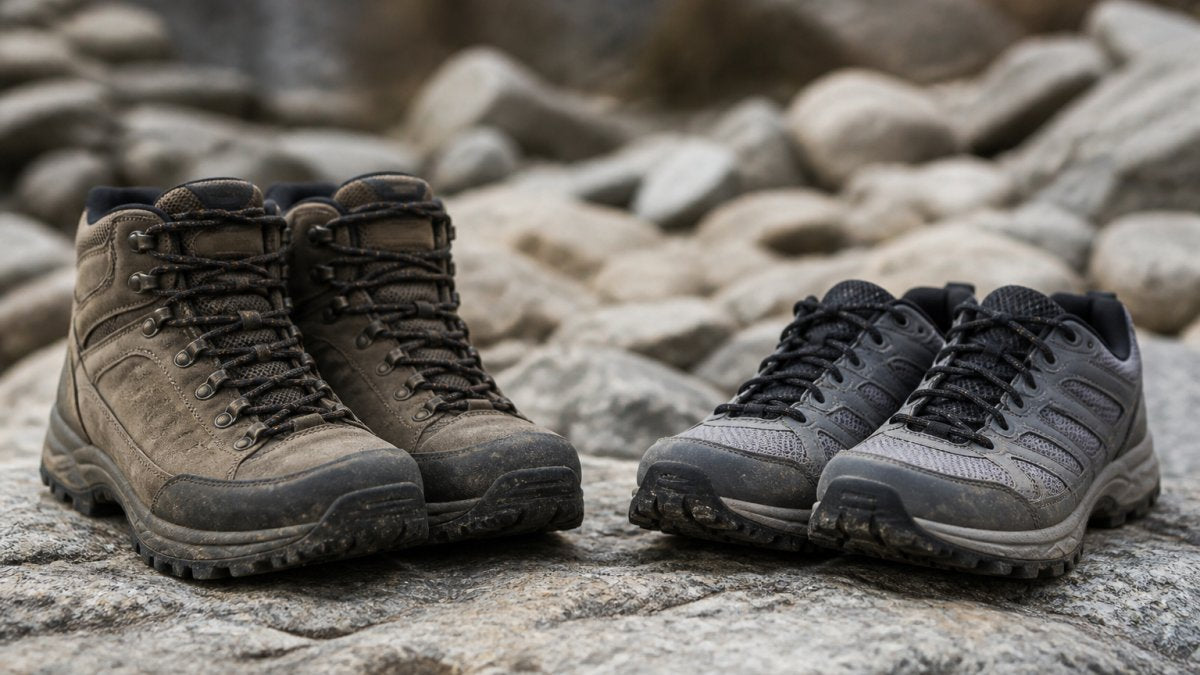
Table of Contents
- Hiking Boots vs Trail Runners for Rocky Paths: The Core Trade-Off
- Comparison Table: Boots vs Trail Runners on Rocky Terrain
- Best Hiking Boots for Rocky Terrain
- Best Trail Running Shoes for Rocky Terrain
- Hiking Boots vs Trail Runners for Backpacking
- Hiking Footwear Grip on Wet Rocks: What Actually Matters
- How to Match Footwear to Rock Type and Load
- Conclusion
- Frequently Asked Questions
Last Updated: October 17, 2026
Hiking Boots vs Trail Runners for Rocky Paths: The Core Trade-Off
The choice between hiking boots and trail runners for rocky paths comes down to one question: how much protection do you need versus how much weight are you willing to carry? At GreatAdventureSupply, we see this decision trip up experienced hikers as often as beginners. Trail runners are lighter and more agile, while boots deliver ankle support and underfoot armor.
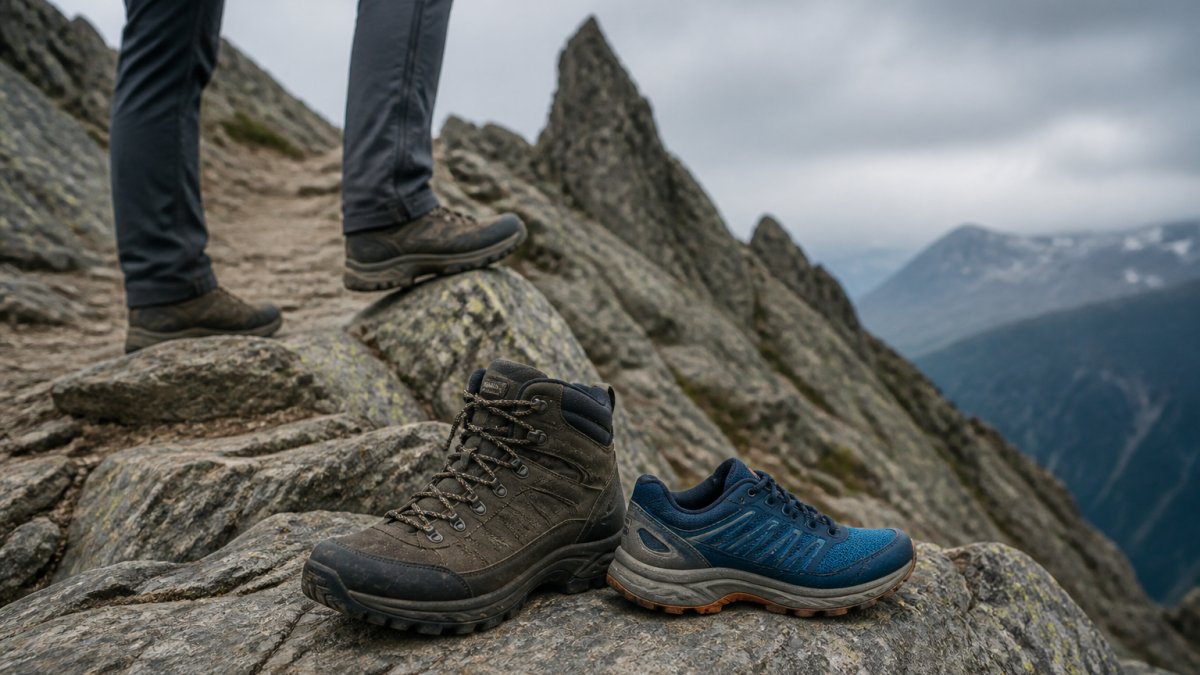
Rocky paths are trails where exposed stone, loose scree, and embedded roots dominate the surface. On that kind of uneven ground, footwear has to absorb impact and resist twisting. A rock plate and a stiffer midsole shield the foot from sharp rocks, while a flexible sole lets you feel the trail. The right answer depends on your pack weight and how technical the route gets.
Key Takeaway
On rocky terrain, protection and agility pull in opposite directions. Pick the footwear that matches your heaviest expected load, not your easiest day.
Comparison Table: Boots vs Trail Runners on Rocky Terrain
Here is how the two categories stack up on the factors that matter most for rocky trails:
| Factor | Hiking Boots | Trail Runners |
|---|---|---|
| Ankle support | High, especially 8-inch shafts | Minimal to moderate |
| Weight | Heavier | Lighter |
| Underfoot protection | Stiffer sole, more armor | Varies; rock plates help |
| Grip on wet rock | Depends on rubber and lugs | Depends on rubber and lugs |
| Breathability | Lower | Higher |
| Best for | Heavy packs, long backpacking | Day hikes, fast miles, light loads |
Neither category wins outright. A lightweight boot can beat a heavy trail runner on support, and a stiff trail shoe can match a boot on underfoot protection.

Best Hiking Boots for Rocky Terrain
Boots earn their place when the trail is unforgiving and your pack weight is high. Two models from our collection cover both ends of that spectrum.
PCT 8 Boot: Maximum Ankle Coverage
The PCT 8 Boot ($140) is built for the roughest ground. Its 8-inch shaft delivers extended ankle support and coverage, which helps on uneven ground where ankle rolling is a real risk. A reinforced toe cap protects against sharp rocks and trail debris, and the water-resistant exterior handles wet conditions. The high-traction outsole holds on varied surfaces. This is the boot we recommend for backpacking with a heavy pack and for long-distance hiking where stability matters more than speed.
PCT Urban Hiker 5" Boot: Lighter Boot Protection
The PCT Urban Hiker 5" Boot ($130) trims weight without giving up protection. It is an ultra-lightweight boot with a high-density rubber composite outsole and a custom lug pattern with large lugs for traction. The siped lug design disperses water for stability on wet, slippery rock. A high-quality EVA foam midsole and high-compression insole reduce foot fatigue on long days. Think of it as boot-level protection for hikers who want less bulk.
Best Trail Running Shoes for Rocky Terrain
Trail runners trade some armor for speed and a lighter step. For rocky routes with light loads, they can be the smarter pick.
PCT Trail Shoe: Cushioned Rock Protection
The PCT Trail Shoe ($120) blends a breathable mesh upper with a cushioned midsole for shock absorption and a grippy outsole built for wet, dry, or rocky surfaces. Reinforced overlays add durability against scree and debris. It suits day hikes and fast miles where you want comfort and breathability over maximum ankle support.
G WEST Men's Trail Running Shoes: Aggressive Grip
The G WEST Men's Trail Running Shoes ($125) lean into traction. An aggressively treaded rubber outsole grips rocky paths, muddy trails, and uneven ground, while the abrasion-resistant upper and shock-absorbing midsole handle long runs or hikes. If your priority is grip on technical trails with a light pack, this is the aggressive option.
Hiking Boots vs Trail Runners for Backpacking
For backpacking, boots usually win. A heavy pack multiplies the load on your ankles and feet, and the ankle support and stiffer midsole of a boot reduce foot fatigue and ankle rolling over miles of rocky terrain. Trail runners still work for ultralight backpackers who keep pack weight low and prioritize breathability. The deciding factor is load: the heavier the pack, the stronger the case for boots.
Watch Out
Choosing ultralight trail runners for a heavy pack on sharp, loose rock is a common mistake. The missing support shows up as sore feet and rolled ankles by mid-afternoon.
Hiking Footwear Grip on Wet Rocks: What Actually Matters
Grip on wet rocks is not one property, it is the interaction of four outsole variables: rubber compound hardness, lug depth, lug shape, and the siping (the thin slits cut into each lug).
Rubber compound. Softer rubber conforms to micro-texture on slick stone and bites better, but it wears faster on abrasive granite and sandstone. Harder compounds last longer but skate on polished, wet rock.
Lug shape and siping. Angled or chevron lugs channel water and debris out from under the foot; siped lugs open and close as you weight them, dispersing the water film that causes slips.
PCT Trail Shoe Blue or Orange →
Rock plate and midsole stiffness. A rock plate protects against sharp rocks but can reduce the sole's ability to conform to irregular stone.
What no tread fixes. Wet, algae-covered rock, mossy stream crossings, and polished granite slabs defeat almost any outsole.
Pro Tip
Match the outsole to your dominant wet surface: soft compound and siped lugs for smooth wet slabs, deeper and more aggressive lugs for wet dirt and loose scree. One shoe rarely excels at both.
How to Match Footwear to Rock Type and Load
Most comparisons treat "rocky" as one surface. It is not. Loose scree, sharp talus, smooth slabs, wet rock, and rocky dirt each stress footwear differently, and the right pick changes with route length, technicality, pack weight, and your own experience and ankle history. Use the framework below instead of a single verdict.
Step 1: Identify the dominant rock surface
- Loose scree (small, shifting stones): Prioritize a stiffer midsole and a rock plate so small stones do not poke through, plus deep lugs that bite into the loose surface. Boots or armored trail shoes both work; the key is underfoot protection and a stable platform.
- Sharp talus (large, angular blocks): This is where underfoot protection matters most. A rock plate, a stiff midsole, and a reinforced toe cap reduce bruising and pressure points. Boots have an edge here, but a plated trail shoe can match them if the load is light.
- Smooth slabs (granite, slickrock): Contact area and rubber compound beat lug depth. Favor a softer compound, shallower and siped lugs, and a sole flexible enough to conform to rounded stone. Deep, aggressive lugs can actually reduce grip here.
- Wet rock: Soft rubber and siping help; no tread guarantees traction on algae-covered or polished wet stone. Plan for slower movement and extra contact points.
- Rocky dirt and embedded roots: A middle-of-the-road outsole with moderate lugs and a semi-stiff midsole handles mixed surfaces without specializing in any one.
Step 2: Weigh route length and technicality
Short, technical day hikes reward precision and ground feel, a flexible trail runner with good grip often feels better than a stiff boot. Long, sustained rocky routes reward protection and reduced foot fatigue, which tips the balance toward a stiffer sole and more ankle coverage. The longer and more technical the route, the more the protection side of the trade-off earns its weight.
Step 3: Factor in pack weight
Pack weight is the single biggest lever. As load rises, so does the stress on your ankles and feet, and the ankle support and stiffer midsole of a boot reduce ankle rolling and fatigue over miles of rocky terrain. Light loads let trail runners' lower weight and breathability pay off. A common pattern: boots for multi-day backpacking, trail runners for fast and light day hikes, and a lightweight boot or plated trail shoe for the middle ground.
Step 4: Account for your own feet and history
Fit and foot shape matter as much as category. Wide feet, high arches, and pressure-point sensitivity change which shoe works, and a history of ankle sprains or balance issues is a reason to favor more coverage and stability, not a guarantee against injury. A poor fit causes blisters and pressure points no matter how protective the shoe, so give any footwear a break-in period before a big trip and size for the socks you will actually wear.
Quick decision matrix
| Route and load | Best fit | Why |
|---|---|---|
| Short, technical day hike, light pack | Trail runner with soft compound and siped lugs | Ground feel, precision, low weight |
| Long rocky day hike, moderate pack | Plated trail shoe or lightweight boot | Balance of protection and agility |
| Multi-day backpacking, heavy pack | Boot with stiff midsole and ankle coverage | Support and reduced fatigue under load |
| Wet, smooth slabs | Soft rubber, shallow siped lugs | Contact area and water dispersal |
| Sharp talus, any load | Rock plate and reinforced toe | Underfoot and toe protection |
Key Takeaway
Match footwear to your heaviest expected load and your dominant rock surface, then adjust for experience and ankle history. No single category wins every rocky route.
Conclusion
Rocky trails punish the wrong footwear choice, and the fix is matching protection to your load and surface. Boots give you ankle support and armor for heavy packs and sharp stone; trail runners give you speed and breathability for light, fast miles. At GreatAdventureSupply, we stock boots and trail shoes built for real trail conditions, from the PCT 8 Boot to the G WEST trail runner. Browse our curated footwear collection and add the right pair to your cart before your next rocky route.

Frequently Asked Questions
Should I get trail runners or hiking boots for rocky paths?
It depends on load and surface. For day hikes with a light pack on rocky trails, trail runners like the PCT Trail Shoe ($120) save weight and reduce foot fatigue. For multi-day backpacking with a heavy pack, or trails with scree and sharp rocks, the PCT 8 Boot ($140) adds an 8-inch shaft for ankle support and a reinforced toe cap. Match the shoe to the weight on your back and how uneven the ground gets.
Are trail runners bad for rocky hikes?
Not automatically. Modern trail runners with a cushioned midsole and grippy outsole handle rocky paths well for lighter loads. The limits show up on sharp, loose rock and long descents under a heavy pack, where a stiffer sole and taller ankle coverage help. If your route is mostly jagged scree or you carry 30+ pounds, a boot gives more underfoot protection and stability.
How much ankle support do you need on rocky trails?
More than flat ground demands, but not always a full boot. Rocky, uneven ground raises the risk of ankle rolling, so a taller shaft helps. The PCT 8 Boot offers an 8-inch shaft for maximum coverage, while the PCT Urban Hiker 5" Boot gives a lighter mid-cut option. If you have weak ankles or a history of sprains, lean toward the taller boot.
Are trail runners suitable for hiking with a heavy pack?
They can work up to a point. Once your pack weight climbs, a flexible trail runner transfers more strain to your feet and ankles, and foot fatigue sets in faster on rocky ground. For heavy loads, the hiking boots vs trail runners for backpacking decision usually favors boots with a stiffer sole and taller shaft. Keep trail runners for light-to-moderate loads.
What gives the best hiking footwear grip on wet rocks?
Look at the outsole rubber and lug pattern. A high-traction outsole with large lugs and a siped pattern, like the one on the PCT Urban Hiker 5" Boot, disperses water for more stability on wet, slippery surfaces. The G WEST Men's Trail Running Shoes use an aggressively treaded rubber outsole for grip on uneven and muddy trails. Wet rock is the hardest surface, so prioritize sticky rubber and deep lugs.
The hardest part of any rocky trip is committing to the right gear before you leave the trailhead. GreatAdventureSupply simplifies that decision with footwear selected for performance and comfort in real conditions, backed by a one-stop collection that covers every adventure level. Compare the PCT 8 Boot, the PCT Urban Hiker 5", and our trail shoes side by side, then add the pair that fits your route to your cart and hit the trail with confidence.