

Cart
0



Table of Contents
- Understanding Rod Specifications for Redfish
- Redfish Rod Length and Action: Finding Your Match
- Matching Rod Power to Lure Weight and Line Strength
- Best Line for Redfish: Braided vs. Monofilament
- Building Your Redfish Rod and Reel Setup
- Rigging Your Redfish Fishing Rig for Success
- Decision Framework: Rod Selection by Technique and Budget
- Saltwater Rod Maintenance and Care
- Frequently Asked Questions
Last Updated: October 21, 2026
Understanding Rod Specifications for Redfish
Learning how to choose a saltwater fishing rod for redfish starts with understanding the key specs. Rod length, power, action, and material work together to determine how well you cast, feel bites, and land fish.
Rod power describes how much force the rod can handle. Light power rods bend easily and suit small lures and light line.
Rod action tells you where the rod bends. Fast action rods bend only at the tip, giving better sensitivity and hook-setting power. Medium-fast action balances sensitivity with forgiveness and is common inshore.
Backbone matters too. For redfish, which pull hard but aren't massive, a moderate backbone prevents the rod from folding over during the fight while still letting you feel head shakes and runs.
Redfish Rod Length and Action: Finding Your Match
Rod Length Ranges for Different Techniques
Rod length affects casting distance and accuracy. Longer rods cast farther but feel heavier and are harder to control in tight spaces; shorter rods handle easily but won't reach distant feeding zones.
For wading and shore fishing, a 6 to 7-foot rod is ideal. Six feet gives control and accuracy in shallow water; seven feet reaches farther without becoming unwieldy. Many wade fishermen prefer 6.5 feet as the middle ground.
Boat fishing allows for slightly longer rods because you're seated and have more room. Seven to 8-foot rods work well here. The extra length helps you reach feeding zones along mangrove edges or sand flats without constantly repositioning the boat.
For surf fishing or fishing from piers and jetties, 7 to 8-foot rods are standard. The height helps you clear waves and reach deeper water where redfish often hold.
Rod Action and Sensitivity Trade-offs
Fast action rods feel every bump and vibration from the bottom, so you sense when your lure ticks shells or bumps structure. That sensitivity helps you detect subtle bites and set hooks faster, but fast action rods tire you during long sessions and offer less forgiveness if your line catches on something.
Medium-fast action rods give most of the sensitivity without the fatigue. They're forgiving enough that light line won't snap as easily on a hard set, yet responsive enough to feel your lure. That's why medium-fast action dominates redfish fishing.
Moderate action rods bend more throughout their length, easier on hands and arms during all-day trips. You'll miss some bottom contact details but avoid the sensory overload that makes fast action rods tiring. They work well in murky water where sensitivity matters less than durability.
Matching Rod Power to Lure Weight and Line Strength
Your rod's power rating should match your lures and line. Underpowered rods feel mushy and won't cast smoothly; overpowered rods feel dead and unresponsive.
Most redfish lures range from 1/4 ounce to 1 ounce. Medium power rods handle this range best. If you're throwing mostly 1/4 to 1/2 ounce lures, medium power is perfect. If you're using heavier swimbaits or topwater plugs in the 3/4 to 1 ounce range, medium-heavy power gives you better control.
Line strength pairs with rod power. Medium power rods typically pair with 10 to 20-pound line. With 10-pound line, medium power with fast action won't overpower it; with 20-pound line, medium power with a stronger backbone prevents breakage on hard sets.
Heavier lures and line require more powerful rods; lighter lures and line need lighter rods. Matching these three elements prevents casting problems and ensures your rod responds correctly.
Best Line for Redfish: Braided vs. Monofilament
Braided line is the default choice for most redfish anglers. Braid has almost no stretch, so you feel everything immediately.
The downside: braid is visible in clear water, and redfish have good eyesight, so thick braid can spook fish in shallow, clear conditions.
Monofilament line stretches slightly, acting as a shock absorber during hard runs. That stretch forgives mistakes, so mono won't snap as easily on a hard hookset.
The tradeoff is lost sensitivity: you won't feel bottom contact or subtle bites as clearly, and mono doesn't cast as far as braid of equivalent strength.
Many redfish anglers use a hybrid approach: braid mainline with a monofilament leader. Braid gives you distance and sensitivity, while the mono leader provides invisibility and shock absorption near the fish. A 12-inch to 3-foot mono leader works well depending on water clarity.
Building Your Redfish Rod and Reel Setup
Reel Size and Drag Capacity Essentials
Reel size is measured in numbers (2500, 3000, 4000, etc.); larger numbers mean bigger spools that hold more line. For redfish, a 2500 to 3000-size spinning reel is standard, holding enough line for typical runs without being tiring to crank all day.
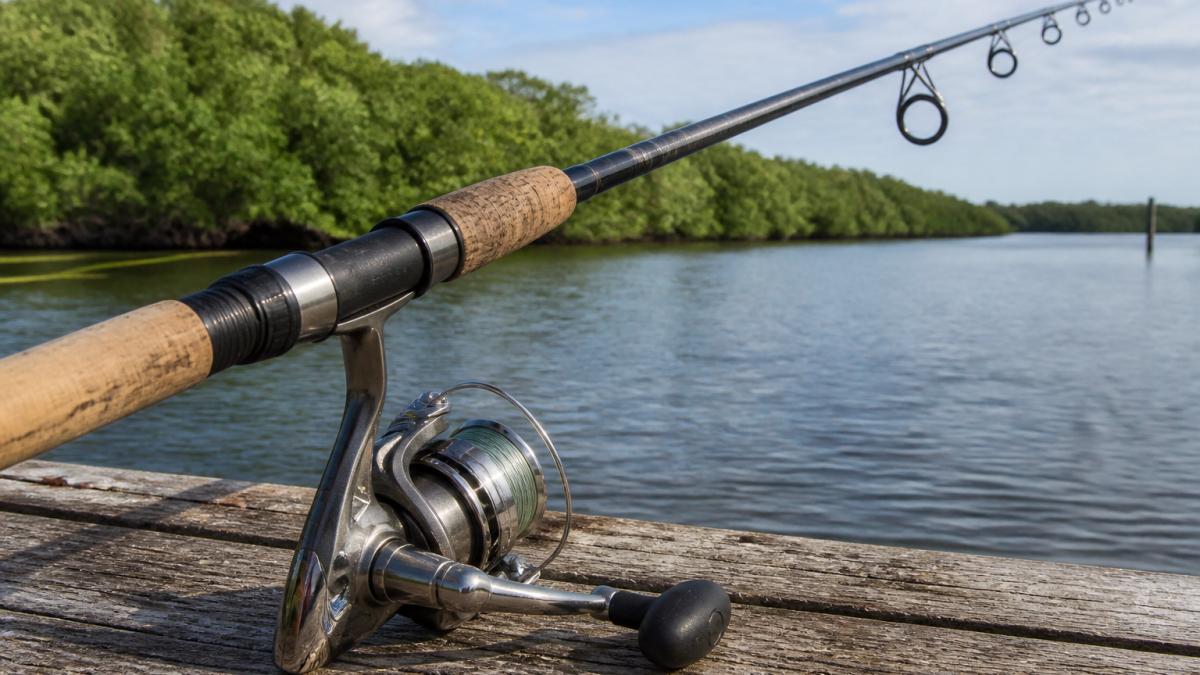
Drag capacity determines how much pressure the reel applies before line slips. For redfish, 10 to 15-pound drag capacity is plenty. What matters more is smooth, consistent drag, since jerky drag causes line breaks.
Set your drag to slip at about one-third of your line's breaking strength. If you're using 15-pound line, set drag to slip at around 5 pounds.
Saltwater Corrosion Resistance and Durability
Saltwater destroys reels not built for it. Look for sealed drag systems that keep salt spray out. Graphite bodies resist corrosion better than aluminum, though less rigid, and stainless steel components outlast chrome-plated steel.
Ball bearings should be sealed or shielded; open bearings corrode within weeks in saltwater. At least four sealed ball bearings keeps a reel smooth through a full season of regular use.
The Magictail Inshore Fishing Rods are built with saltwater durability in mind. Their carbon fiber construction resists corrosion, and the ergo comfort reel seat is designed to pair with quality saltwater reels.
Magictail Inshore Fishing Rods →

Rinse your entire rod and reel with fresh water after every saltwater session; this single habit doubles reel lifespan. Wipe down the blank, guides, and reel body, then let them dry completely before storing.
Rigging Your Redfish Fishing Rig for Success
A solid redfish rig starts with your mainline. Braid mainline (15 to 20-pound) gives casting distance and sensitivity.
At the leader's end, tie your lure directly or use a small snap swivel. Direct ties are stronger, but snap swivels let you change lures faster.
For live bait rigs, use a circle hook (2/0 to 4/0) tied directly to your leader. Circle hooks hook themselves in the corner of the fish's mouth, which means fewer lost fish. Rig live bait through the nose or back to keep it swimming naturally.
Topwater plugs and soft plastic lures don't need leaders in most conditions. Tie them directly to your braid if the water is murky. In clear water, add a 12-inch mono leader to reduce visibility.
Decision Framework: Rod Selection by Technique and Budget
Wading and Shore Fishing Rod Choices
When deciding how to choose a saltwater fishing rod for redfish in wade fishing, balance casting distance with control. A 6.5-foot medium power, medium-fast action rod is your best choice: it reaches feeding zones while staying accurate in close quarters, and medium power handles the 1/4 to 1/2 ounce lures most effective for wading without overloading your arm.
Pair this setup with a 2500-size reel and 15-pound braid mainline plus a 2-foot 12-pound mono leader. This combination casts far enough to cover productive water, feels responsive enough to detect bottom structure, and forgives casting mistakes.
Shore fishing from piers or jetties benefits from a 7-foot medium or medium-heavy power rod. The extra length helps you clear pilings and reach deeper water where redfish often hold. Medium-heavy power handles the 1/2 to 3/4 ounce lures that work in deeper water and stronger current.
Boat Fishing and Nearshore Setup
Boat fishing lets you position exactly where redfish are, so rod length is less critical. A 7-foot medium power, fast action rod is ideal: fast action sets hooks quickly when redfish bite aggressively in deeper water, and 7 feet gives enough reach to work mangrove edges and deeper flats without feeling unwieldy seated.
Use a 3000-size reel with 20-pound braid and a 3-foot 15-pound mono leader. This setup handles heavier lures, stronger current, and longer casting distances without tiring your arm during a full day on the water.
For nearshore fishing beyond the flats, a 7 to 8-foot medium-heavy power rod with fast action works best. You'll encounter slightly larger redfish and need more backbone for longer fights. Pair it with a 3000 or 4000-size reel, 20 to 30-pound braid, and a 3-foot leader.
Budget Tiers and Value Trade-offs
Entry-level rods (under $100) use fiberglass or low-grade graphite. They're durable and forgiving, good for beginners, but heavier after hours of casting and less sensitive, so you'll miss some bottom contact details.
Mid-range rods ($100 to $300) use quality graphite with carbon wrapping for added strength. They're significantly lighter than entry-level rods and more sensitive. This is where most serious redfish anglers land.
The Magictail Inshore Fishing Rods at $244.99 sit squarely in the mid-range sweet spot. They feature carbon fiber blanks with additional carbon wrapping, ergo comfort reel seats, oversized K guides, and a doorknob butt cap.
Premium rods ($300+) use exotic materials and advanced construction. They're lighter, more sensitive, and last longer, but for most redfish anglers the performance gain doesn't justify the cost. They shine if you fish 100+ days per year or compete in tournaments.
| Budget Tier | Price Range | Best For | Rod Weight | Sensitivity |
|---|---|---|---|---|
| Entry-level | Under $100 | Beginners, casual fishing | Heavier | Lower |
| Mid-range | $100-$300 | Serious redfish anglers | Moderate | Good |
| Premium | $300+ | Tournament fishing, daily use | Light | Excellent |
Saltwater Rod Maintenance and Care
Saltwater is corrosive, attacking rod guides, reel components, and the blank itself.
Dry everything completely before storing. Moisture trapped under the reel seat or in guide crevices leads to corrosion.
Check your guides monthly for corrosion or damage. Corroded guides create rough spots that fray your line.
Inspect your rod blank for cracks or splintering. Minor surface cracks don't affect performance, but deep cracks weaken the rod.
Store rods horizontally on a rod rack or leaning against a wall. Never store them vertically or hanging from the guides.
Replace your mainline every season or after 50+ days of fishing; braid weakens from UV exposure and salt damage, and fresh line prevents breakoffs at critical moments.
Choosing the right saltwater fishing rod for redfish transforms your fishing from frustrating to rewarding. The rod, reel, and line work as a system, each component matters.
Frequently Asked Questions
What rod length is best for redfish fishing?
Rod length depends on your technique. For wading and shore fishing, 7 to 8 feet offers good casting distance and control. Boat fishing and nearshore work benefit from 6.5 to 7.5 feet for maneuverability in tight quarters. Longer rods (8+ feet) increase casting range but reduce accuracy in confined spaces. Match your rod length to where and how you fish redfish most often.
What is the best line for redfish?
Braided line is the top choice for redfish because it offers superior sensitivity, zero stretch, and better hook setting on hard mouths. Use 15 to 20-pound braided line for most inshore redfish work. Add a 20 to 30-pound monofilament or fluorocarbon leader (2 to 3 feet) to reduce visibility and abrasion from shells and rocks. Monofilament alone works but sacrifices sensitivity and requires heavier pound-test to match braid's durability.
How do I know if a fishing rod is made for saltwater?
Saltwater rods feature corrosion-resistant components: stainless steel or sealed guides, anodized aluminum reel seats, and quality drag systems rated for saltwater. Check the product description for mentions of saltwater durability, sealed drag, and corrosion resistance. Avoid freshwater rods in saltwater; they corrode quickly and lack the backbone needed for redfish. Saltwater-ready rods like the Magictail Inshore Series ($244.99) are built specifically to handle the harsh marine environment.
What rod power and action should I choose for redfish?
Medium power with medium-fast to fast action is ideal for most redfish fishing. Medium power handles 1/4 to 3/4-ounce lures and 15 to 20-pound line comfortably. Fast action provides better hook setting and sensitivity to detect bites. Light power works for artificial lures in shallow water but limits your ability to handle large fish and thick cover. Medium-heavy power is overkill for typical redfish but useful in heavy grass or when targeting trophy-sized fish over 8 pounds.


