Cart
0


Table of Contents
- Start With Your Fishing Style and Target Species
- Match Reel Size, Line, and Drag to Your Setup
- Drag Systems Compared: Spinning, Baitcasting, Conventional, and Fly
- How Much Drag Do I Need on a Spinning Reel?
-
How to Set Drag on a Fishing Reel (Step by Step)
- Step 1: Thread the Line Through the Rod Guides
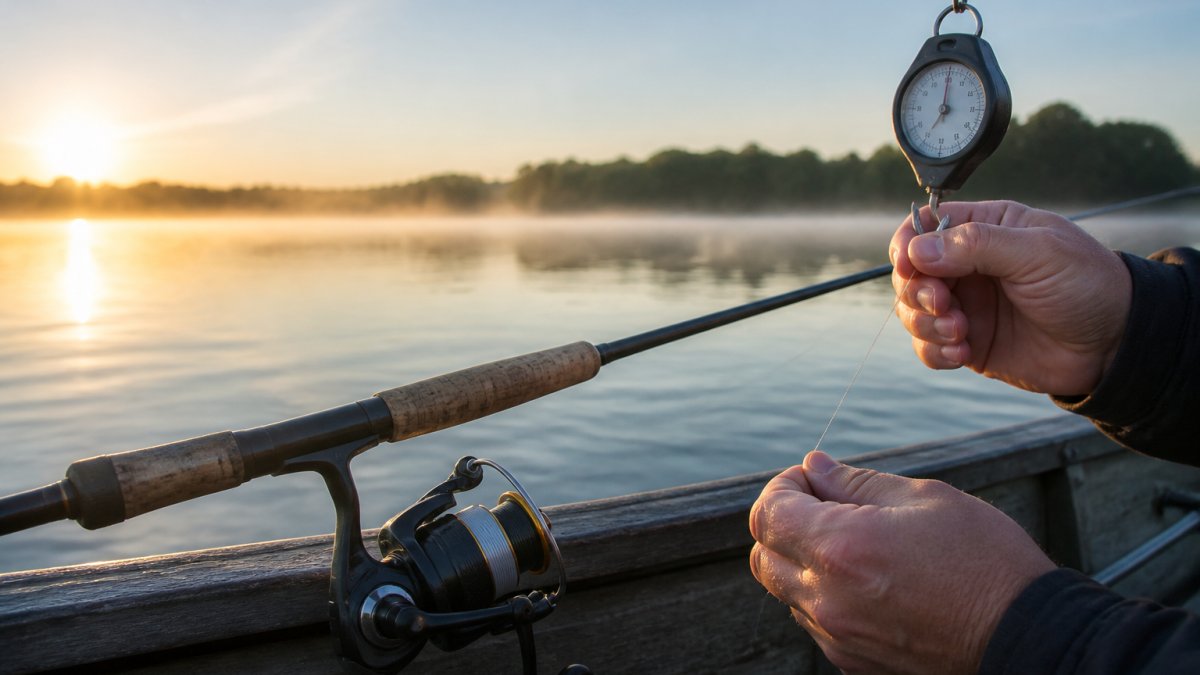
- Step 2: Attach the Scale to Your Line
- Step 3: Pull and Read the Scale
- Step 4: Adjust the Drag Knob
- Step 5: Confirm Your Target
- Scenario-Based Drag Settings by Line, Leader, and Hook
- Measuring Drag With a Scale: Technique and Limits
- Recalibrating After a Line Change or Big Fish
- Fishing Reel Drag Washers: Materials and What They Do
- Maintenance, Troubleshooting, and Signs of Drag Failure
- Conclusion
- Frequently Asked Questions
Last Updated: October 12, 2026
Start With Your Fishing Style and Target Species
The right fishing reel drag system starts with two questions: what fish are you chasing, and how are you fishing for them?
Here's how fishing style shapes your choice:
- Panfish and trout: Light drag, 2-6 lb of pressure
- Bass and walleye: Medium drag, 8-12 lb
- Catfish and stripers: Heavy drag, 15-30 lb
Target species decides line weight. Line weight decides drag range. Drag range narrows your reel options fast.
A drag system is the mechanism inside a reel that applies adjustable resistance to line leaving the spool, letting a fish run without breaking your line or rod.
Pro Tip
Match drag to your leader, not just your main line. A 20 lb braid main line with a 12 lb fluorocarbon leader means your drag ceiling is 12 lb, not 20.
Match Reel Size, Line, and Drag to Your Setup
Reel size, line capacity, and drag rating must work as one system. Get one wrong and the others suffer.
A 1000-size spinning reel holds roughly 180 yards of 6 lb mono.

The trade-off most buyers miss: a large reel with high max drag feels heavy after four hours of casting.
Build your setup in this order:
- Pick your target species
- Choose line type and pound test
- Match reel size to line capacity
- Confirm drag range covers your line strength
- Check reel weight against your rod balance
A balanced setup casts better and fights fish with less fatigue.
Drag Systems Compared: Spinning, Baitcasting, Conventional, and Fly
Each reel type routes drag force differently, which determines how you adjust pressure, how smooth the release feels, and what situations the reel handles well. Use the chooser below, then read the mechanism notes for the trade-offs.
Quick Chooser: Which Drag System Fits Your Setup
| Your situation | Reel type | Drag mechanism to look for | Why |
|---|---|---|---|
| Panfish, trout, finesse bass on light line | Spinning | Front drag with felt or carbon fiber washers | Easy mid-fight adjustment, light startup pressure, protects 4-8 lb line |
| Bass in cover, walleye, general freshwater | Baitcasting | Star drag with carbon fiber stack | More cranking power, compact body, good for 10-20 lb line |
| Catfish, stripers, heavy cover, trolling | Conventional | Lever drag or heavy star drag | Precise, repeatable pressure settings; handles 20-50 lb line |
| Inshore salt, redfish, snook, light offshore | Spinning or conventional | Sealed carbon fiber drag | Resists salt and grit, holds setting across long runs |
| Offshore, big game, deep dropping | Conventional | Lever drag with heat-treated carbon fiber | High usable pressure, smooth under sustained load |
| Trout, panfish, light salt on fly | Fly | Disc drag (sealed or cork) | Smooth release on light tippet, protects 3-6 lb tippet |
| Small stream, short casts, light tippet | Fly | Click-and-pawl | Simple, low startup inertia, adequate for short runs |
Spinning Reels: Front Drag vs Rear Drag
Front drag spinning reels adjust better for fighting fish. The washers sit inside the spool, so pressure stays consistent as line peels off and the spool rotates.
Rear drag reels put the knob at the back of the body, easier to reach mid-fight, but the drag stack runs through more internal parts, meaning more flex and more places for grit to collect under load.
Baitcasting Reels: Star Drag vs Lever Drag
Most baitcasters use a star drag, a star-shaped wheel on the handle side you turn to add or reduce pressure.
Lever drags, common on conventional reels and some heavy baitcasters, sweep from free spool to strike to full. The advantage is repeatability: mark your strike position and return to the exact same pressure every time, critical for trolling and offshore, where a consistent setting protects line and leader across many hookups.
Conventional Reels: Lever Drag Dominates
Conventional reels are built for power and line capacity, and lever drag is the standard: a defined strike setting, a defined full setting, and free spool, all on one lever. Set strike to your working drag, then push to full only when needed. This is the system offshore anglers trust for tuna, billfish, and deep dropping.
Fly Reels: Disc Drag vs Click-and-Pawl
Fly reels split into two camps. Click-and-pawl reels use a spring-loaded pawl against a gear for light, audible resistance, simple, with very low startup inertia, suiting small streams and light tippet where you rarely need more than a pound or two of pressure.
Disc drag fly reels use a stack of washers, cork, carbon fiber, or composite, compressed by a knob, giving smooth, adjustable pressure for long runs on light tippet. Sealed disc drags keep salt and grit out, which matters in saltwater.
Pro Tip
Match the drag mechanism to how often you adjust mid-fight. If you rarely touch the knob, a star drag or click-and-pawl is fine. If you adjust constantly, fighting big fish on light line, or trolling with changing conditions, a lever drag or front drag pays off.
How Much Drag Do I Need on a Spinning Reel?
Set your maximum drag at roughly 20-30 percent of your line's breaking strength. That working range gives a fish room to run without snapping your line.
Here's the math in plain terms:
| Line Pound Test | Working Drag (20-30%) | Max Drag Setting |
|---|---|---|
| 6 lb | 1.2-1.8 lb | 2 lb |
| 10 lb | 2-3 lb | 3 lb |
| 15 lb | 3-4.5 lb | 5 lb |
| 20 lb | 4-6 lb | 6 lb |
| 30 lb | 6-9 lb | 10 lb |
A reel rated for 8kg max drag gives you plenty of ceiling for most inshore work. You rarely use the full rating. You use the low end, set smooth.
Watch Out
Cranking a drag knob to maximum "just in case" is the fastest way to break line on a big fish. The drag exists to protect your line, not to win the fight by force.
How to Set Drag on a Fishing Reel (Step by Step)
Setting drag takes about two minutes once you know the process. Do it before your first cast, not after a fish is on, the goal is a repeatable number, not a guess.
Total Time: 2-3 minutes Difficulty: Beginner
What You'll Need:
- Your rod and reel, spooled with line
- A spring scale or luggage scale (a digital fish scale works well)
- A leader or hook tied to your line
Step 1: Thread the Line Through the Rod Guides
Run your line through every guide. A missed guide changes the angle and gives a false reading, the line should follow the same path it takes when a fish pulls.
Stone Creek ™ - Voyager™ Fly Reel 7/8/9 wt. →
Step 2: Attach the Scale to Your Line
Tie the scale to your leader or hook. Hold the rod at a normal fighting angle, roughly 45 degrees, butt braced against your hip or a boat gunwale. Rod angle changes the reading because it changes the direction of pull against the drag stack.
Step 3: Pull and Read the Scale
Pull steadily until the drag slips and read the scale, that's your current drag pressure. Pull slowly for a truer reading, since startup inertia makes the initial pull read higher than steady drag pressure. Yank and you measure break-free force, not working drag.
Step 4: Adjust the Drag Knob
Turn the knob clockwise to add pressure, counterclockwise to reduce it. Re-test after each turn. Make small adjustments, an eighth to a quarter turn at a time, and re-read the scale.
Step 5: Confirm Your Target
Aim for 20-30 percent of your line's breaking strength, then mark the knob position with tape or a paint pen so you can reset it fast after storage or a line change.
Scenario-Based Drag Settings by Line, Leader, and Hook
A single percentage rule is a starting point, not a universal setting. The right number depends on your weakest link, usually the leader, knot, or hook, not the main line.
| Setup | Main line | Leader / tippet | Working drag | Notes |
|---|---|---|---|---|
| Trout, small hooks, light tippet | 6 lb braid | 4 lb fluorocarbon | 1-1.5 lb | Protect 4 lb tippet; light wire hooks bend before line breaks |
| Bass, Texas rig, heavy cover | 30 lb braid | 20 lb fluorocarbon | 5-7 lb | Enough to turn fish, low enough to protect knot |
| Walleye, jigging | 10 lb braid | 8 lb fluorocarbon | 2-3 lb | Light hooks need light drag |
| Catfish, circle hooks | 50 lb braid | 40 lb mono | 10-14 lb | Circle hooks need steady pressure to set in corner of mouth |
| Inshore redfish, live bait | 20 lb braid | 20 lb fluorocarbon | 5-7 lb | Sealed drag holds setting across long runs |
| Offshore trolling, skirted lures | 50 lb mono | 80 lb leader | 15-20 lb at strike | Lever drag strike position; push to full only if needed |
| Fly, trout, 5X tippet | , | 5X (about 4.5 lb) | 1-1.5 lb | Disc drag; click-and-pawl for small streams |
Measuring Drag With a Scale: Technique and Limits
A scale gives you a real number, but it has limits.
Heat changes drag too. After a long fight, washers warm up and pressure can creep, up or down depending on material.
Line path matters. On a spinning reel, line comes off the spool lip; on a conventional reel, it comes off the spool directly.
Sealed drag systems hold their setting better than open ones, which is why offshore anglers pay more for them.
Recalibrating After a Line Change or Big Fish
Any time you change line, leader, or hook size, re-set your drag. A 20 lb leader with a 30 lb main line means your drag ceiling is 20 lb, not 30. After a big fish, back the drag off, let the reel cool, then re-check with the scale. Mark the knob so you can return to your working setting without guessing.
Key Takeaway
Set drag to your weakest link, usually the leader or knot, not your main line. Mark the knob, re-check after heat or a line change, and pull slowly on the scale for a true reading.
Fishing Reel Drag Washers: Materials and What They Do
Drag washers are the friction discs inside your reel that create resistance. Their material decides how smooth and consistent your drag feels.
- Felt washers: Smooth and cheap, but they wear and hold moisture
- Carbon fiber washers: Smooth, heat-resistant, long-lasting
- Oil-impregnated felt: Good for light drag, common in budget reels
Carbon fiber is the standard for serious fishing. It handles heat, stays smooth, and lasts.
For fly anglers, a heavy-duty disc drag system gives smooth, consistent stopping power even when fighting large fish, which matters on light tippet.
Maintenance, Troubleshooting, and Signs of Drag Failure
Drag failure usually shows up before it costs you a fish. Watch for these signs:
- Jerky pressure: Washers are dry or worn
- Slipping under load: Drag stack needs service or replacement
- Stuck drag: Salt or grit inside the mechanism
Rinse your reel with fresh water after every saltwater trip. Dry it fully.
A common mistake is over-tightening the drag for storage. That flattens the washers and ruins smoothness over time.
Check washers once a season, replace carbon fiber washers when they glaze or feel rough, and keep a spare drag knob O-ring on hand.
Key Takeaway
Back off your drag before storage. It's the single easiest habit that extends washer life and keeps pressure smooth for years.
Conclusion
Choosing the right fishing reel drag system comes down to matching your species, line, and reel type. Align those three and the rest falls into place.
At GreatAdventureSupply, we stock reels built for real conditions. Our 6800 CTS Round Baitcaster Reel carries a 40 lb heat-treated carbon fiber drag for catfish and heavy cover.

Browse our fishing reel collection and find the drag system that fits your next trip. Add to Cart and get on the water with gear you can trust.
Frequently Asked Questions
What should I set the drag on a fishing reel to?
Start at about 20 to 30 percent of your line's breaking strength. With 20-pound-test line, that means roughly 4 to 6 pounds of drag. Pull line off the spool with a spring scale or luggage scale and adjust the drag knob until it slips near that number. This leaves a safety margin so a hard run does not snap your line or straighten your hooks.
Is 20 pounds of drag good?
It depends on what you are fishing for. A 20-pound maximum drag rating suits heavy inshore and light offshore work, and reels like the Old Mariner Inshore Series 912 offer fine adjustment from 0 to 20 pounds. For most freshwater bass, walleye, or trout setups, you will never need that much. Match the rating to your line and target species rather than buying the highest number.
What is the difference between front-drag and rear-drag spinning reels?
A front drag puts the adjustment knob on top of the spool, which usually gives smoother, more consistent pressure and better heat dissipation. A rear drag places the knob at the back of the reel body, which is easier to reach mid-fight and simpler to service. Front drag is the better choice for big fish and braided line, while rear drag suits lighter setups and quick adjustments.
How do you test and adjust fishing reel drag?
Tie your line to a spring scale or luggage scale, hold the rod at a typical fighting angle, and pull steadily until the drag slips. Note the reading, then turn the drag knob a quarter turn and repeat. Check that pressure stays smooth rather than jumping. Recheck after the drag heats up, and back off the drag knob completely before storing the reel.