

Cart
0

Table of Contents
- Quick Comparison: Top Multifunctional Camping Tools
- Essential Camping Multi-Tool Features to Look For
- Best Multifunctional Tools for Different Camping Scenarios
- How to Maintain Camping Multi-Tools in the Field
- Best Camping Gear for Beginners 2026
- Weight-to-Performance: Building Your Ideal Gear Checklist
- Durability and Material Quality: What Actually Lasts
- Conclusion
Last Updated: August 17, 2026
Quick Comparison: Top Multifunctional Camping Tools
A single versatile tool miles from town can mean the difference between a smooth trip and a frustrating one. The best multifunctional camping tools combine portability with genuine utility, gear that does multiple jobs without weighing you down or consuming precious pack space.
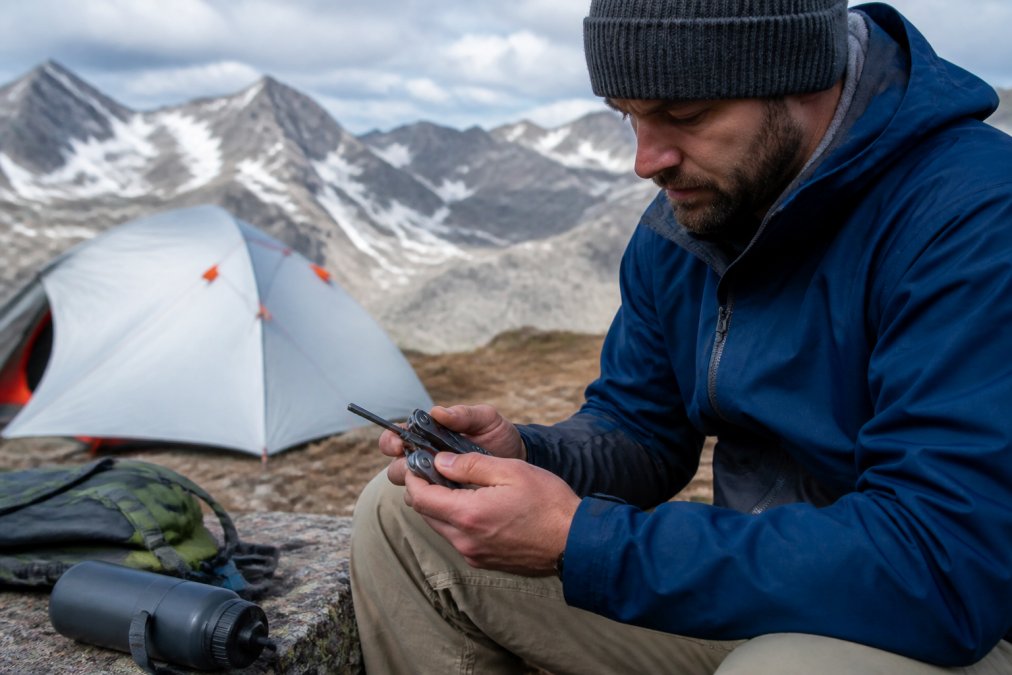
At GreatAdventureSupply, we offer a wide range of high-quality outdoor and sporting goods, meticulously selected for performance, comfort, and reliability in real-world conditions.
| Tool | Type | Best For | Key Advantage |
|---|---|---|---|
| Leatherman Signal | Full-size multi-tool | Backcountry survival | Fire starter + whistle integrated |
| Gerber Suspension-NXT | Compact multi-tool | Everyday carry | Affordable, accessible tools |
| SOG PowerAssist | Power-focused multi-tool | Heavy-duty tasks | Assisted blade + compound use |
| CRKT Eat'N Tool | Utensil combo | Lightweight backpacking | Spoon/fork with hex wrenches |
| Victorinox Fieldmaster | Classic multi-tool | General outdoor use | Versatile 15-function design |
| UST Klipp Biner Mug | Cooking/carry | Camp kitchen | Insulated + carabiner attachment |
| Zippo 4-in-1 Woodsman | Camp tool | Firewood prep | Axe, saw, stake puller, mallet |
| BioLite CampStove 2+ | Cooking system | Eco-conscious camping | Burns wood, charges devices |
| Goal Zero Yeti 200X | Power station | Electronics charging | Portable, multiple output ports |
Key Takeaway
The right multifunctional camping tools aren't about having the most features, they're about having the right features for YOUR specific trips. A backcountry solo hiker needs different gear than a family car camper.
Essential Camping Multi-Tool Features to Look For
A useful camping multi-tool depends on three criteria: accessibility, durability, and weight-to-performance ratio. The tools you'll use most, knife, pliers, can opener, should open quickly without fumbling.
Durability matters because a failed tool becomes dead weight. Look for tools where blades lock in place during use; non-locking blades are dangerous under pressure. Weight-to-performance is where most campers compromise poorly. A full-size multi-tool might weigh 8 ounces and do 20 things, while a specialized lightweight option might weigh 2 ounces and do 5 things brilliantly. The question isn't "how many tools?" but "how often will I actually use each one?"
Field-tested gear reveals what marketing won't: brilliant designs on paper may have uncomfortable handles or blades that dull quickly. Ergonomic design and material quality matter as much as feature count.
Pro Tip
Before buying any [multifunctional camping](/products/multifunctional-camping-tableware-stainless-steel-knife-fork-spoon-outdoor-portable-survival-eating-tools) tool, ask yourself: "What will I use this for on my actual trips?" If the answer is "just in case," it probably won't earn its place in your pack.
Best Multifunctional Tools for Different Camping Scenarios
The tool perfect for a week-long backcountry expedition isn't ideal for a weekend family campout. Your camping style determines which features matter most.
Full-Size Multi-Tools for Backcountry Expeditions
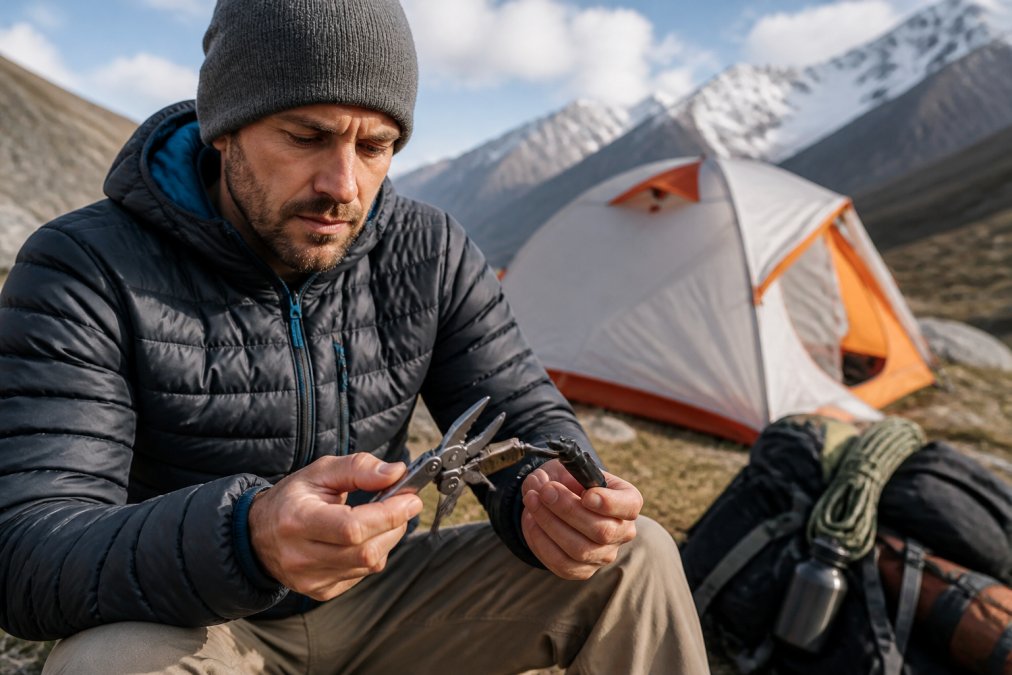
The Leatherman Signal is built for remote camping where you can't run to a store for a replacement. Its 19 tools include a ferrocerium rod (fire starter) and emergency whistle, features you won't find on most multi-tools. The integrated diamond-coated sharpener lets you maintain your blade's edge in the field. The ferrocerium rod works when wet and at altitude, unlike matches or lighters. At 6.5 ounces, it's heavier than compact options, but for expeditions carrying 40+ pounds, the weight is justified by added capability.
Lightweight Options for Weight-Conscious Backpackers
The CRKT Eat'N Tool does fewer things but does them brilliantly for ultralight trips. At under 1 ounce, it combines a spoon and fork with a bottle opener, screwdriver, and three metric hex wrenches. Perfect for hikers counting every ounce who don't need a full-size pliers set. For backpackers, this represents the sweet spot between capability and pack weight.
Specialized Tools for Cooking and Camp Setup
The UST Klipp Biner Mug 1.0 solves a specific problem: carrying an insulated mug without adding weight or bulk. The carabiner handle clips directly to your pack, and double-wall stainless steel keeps drinks hot or cold.
The Zippo 4-in-1 Woodsman is a campsite tool weighing over a pound. If you're car camping or establishing a base camp, the integrated axe, bow saw, tent stake puller, and mallet handle 80% of your camp setup tasks.
The BioLite CampStove 2+ burns wood (eliminating fuel to carry), boils water in 4.5 minutes, and generates 3W of electricity to charge your phone. For eco-conscious campers or extended trips, this is genuinely innovative.
Watch Out
The BioLite CampStove requires constant attention and fuel. Don't expect set-it-and-forget-it cooking like a [traditional camp stove](/products/integrated-heat-collection-stove-system-for-camping-hiking-and-outdoor-adventures). In wet conditions, it's less reliable than gas-powered alternatives.
How to Maintain Camping Multi-Tools in the Field
A multifunctional camping tool is only useful if it stays functional. Field maintenance is simpler than you'd think but matters, most camping guides skip the practical how-to details that keep tools reliable for years.
Daily Field Care Protocol
After each day of use, wipe your tool down with a dry cloth. Moisture causes corrosion that makes joints stiff and blades dull. Open each implement fully and wipe interior surfaces. Store your tool in a dry location in your pack. Many quality multi-tools come with a leather or nylon sheath; use it to protect both the tool and your other gear.
Blade Maintenance and Sharpening
A dull blade is dangerous because it requires more force to cut, increasing slip and injury risk. Carry a small ceramic honing rod (2-3 ounces) on longer trips.
To sharpen a multi-tool blade in the field: hold the tool steady with the blade fully open and locked. Position the ceramic rod at a 15-20 degree angle to the blade edge. Draw the rod along the blade from hilt to tip in smooth strokes. Repeat 5-8 times per side. Test the edge on paper or soft wood; it should cut cleanly without downward pressure.
Joint and Pivot Maintenance
Check pivot points regularly. If your pliers or knife blade feels stiff, a tiny drop of oil will restore smooth operation. Apply sparingly; excess oil attracts dirt.
If a joint becomes stuck, do not force it. Instead, apply a tiny amount of oil and let it soak for 10-15 minutes. Work the joint gently back and forth with small movements, gradually increasing range of motion.
Troubleshooting Common Field Problems
Blade won't lock open: Most multi-tools use a friction lock or spring-loaded detent. Tighten the pivot screw with the appropriate hex wrench in small increments, a quarter turn at a time. Test after each adjustment. If tightening doesn't work, the blade may be bent and shouldn't be used until professionally straightened.
Pliers won't close fully: Debris or corrosion is usually the culprit. Open the pliers fully and inspect interior surfaces. Use a small stick to scrape away visible corrosion or debris. Wipe clean with a dry cloth. Apply a single drop of oil to the pivot and work the pliers open and closed 10-15 times.
Spring-loaded implements won't snap back: If the tool is new, the spring may need break-in; use the implement repeatedly. If older, apply oil to the pivot and work the implement repeatedly. If it still won't snap back, the spring has lost tension and the tool should be serviced professionally.
Corrosion spots on the blade or handle: Surface corrosion can be cleaned with oil and a soft cloth. Rub gently in circular motions until discoloration lifts. After removing corrosion, dry thoroughly and apply a thin coat of oil to prevent recurrence.
Extended-Trip Maintenance Schedule
For trips longer than a week:
- Every evening: Wipe the tool dry and check that all blades lock securely.
- Every 3-4 days: Apply a single drop of oil to each pivot point and work all implements.
- Every week: Sharpen the blade if used heavily. Check for corrosion and address immediately.
Pro Tip
Carry a small maintenance kit: a microfiber cloth, a ceramic honing rod, a 0.5 oz bottle of gun oil, and a small hex wrench or screwdriver that fits your tool's pivot screws. Total weight is under 2 ounces and will extend your tool's life by years.
Best Camping Gear for Beginners 2026
New campers often buy too much gear, then discover they only use 20% of it. Start with versatile, multifunctional camping tools that solve multiple problems, but understand how to use these tools safely.
Choosing Your First Multi-Tool
Begin with a single quality multi-tool rather than a collection of single-purpose tools. The Gerber Suspension-NXT is an excellent starter because it's affordable, reliable, and teaches you which tools you actually use. For beginners, avoid full-size expedition tools like the Leatherman Signal initially. A mid-size tool with 10-12 core implements (knife, pliers, can opener, screwdrivers, file) is ideal for learning what you actually need.
Safety Fundamentals for Multi-Tool Use
Before your first trip, practice using your multi-tool at home. This is critical.
Blade safety: Always cut away from your body and away from your other hand. When opening a blade, keep your fingers clear of the pivot point. Never apply sideways pressure to a blade. When done cutting, close the blade slowly and deliberately using both hands.
Pliers safety: Multi-tool pliers are typically smaller and less powerful than dedicated pliers. Use them for light tasks: opening cans, adjusting gear, removing splinters.
Saw safety: Always secure the wood you're cutting. Never use a saw one-handed. If the blade binds, stop immediately and free it gently.
Screwdriver safety: Use the correct size screwdriver for the screw. Apply steady, controlled pressure rather than forcing it.
Safe Campsite Setup for Beginners
For car camping with family, the Zippo 4-in-1 Woodsman is worth the investment, but only if you understand how to use it safely.
Axe safety: Establish a "tool zone" at least 10 feet away from tents and other people. Swing from your shoulder, not your elbow. Never swing an axe toward another person. Always place the axe on the ground when not actively using it.
Saw safety: The bow saw requires two hands and steady pressure. Secure the log you're cutting. Never use a saw one-handed.
Mallet safety: The mallet is for driving tent stakes. Always keep your other hand clear of the stake when striking.
Beginner-Friendly Tool Combinations
For backpacking, start with the lightest option covering your actual needs. The CRKT Eat'N Tool plus a small fixed-blade knife is better than a heavy full-size multi-tool you'll never fully use.
For car camping with family, combine the Zippo Woodsman with a mid-size multi-tool like the Gerber Suspension-NXT.
For weekend backpacking trips, the Gerber Suspension-NXT alone is sufficient. It's light enough to carry without complaint, capable enough to handle camp cooking and gear repairs, and affordable enough that you won't panic if you lose it.
Understanding Tool Limitations
Multifunctional camping tools are supplements to proper planning, not substitutes for it. Understand what your multi-tool cannot do: it cannot replace a proper camp stove, a proper knife, a proper saw, or proper planning. Start simple, use your tools on actual trips, and upgrade only when you've identified a genuine gap.
Watch Out
Multi-tools are sharp and powerful. Respect them. A moment of carelessness can cause serious injury. Practice at home, establish safety habits, and maintain focus when using your tools in the field.
Weight-to-Performance: Building Your Ideal Gear Checklist
The best camping gear checklist balances three competing demands: weight, functionality, and durability. Every item should earn its place by doing something you can't do without it or by combining functions that would otherwise require multiple items.
Start by listing what you actually do on trips. If you never build fires, a ferrocerium rod is dead weight. If you always cook with a camp stove, you don't need a tool with a built-in fire starter.
For backpacking trips, a typical ultralight setup includes:
- One compact multi-tool (2-4 ounces)
- One fixed-blade knife (2-3 ounces)
- One specialized cooking tool like the CRKT Eat'N Tool (under 1 ounce)
- One lightweight mug with carabiner (8-9 ounces)
Total weight for this system: roughly 15 ounces, or about the weight of a water bottle.
For car camping or base camp expeditions, you can carry heavier, more capable tools:
- One full-size multi-tool like the Leatherman Signal (6.5 ounces)
- One camp tool like the Zippo Woodsman (16 ounces)
- One insulated mug (9 ounces)
- One power station if electronics matter (5 pounds)
| Camping Style | Primary Multi-Tool | Secondary Tool | Weight | Best For |
|---|---|---|---|---|
| Ultralight backpacking | CRKT Eat'N Tool | Fixed blade knife | <1 lb | Solo hikers, weight-conscious |
| Backpacking | Gerber Suspension-NXT | Compact knife | 1-2 lbs | Beginners, general camping |
| Expedition backpacking | Leatherman Signal | Dedicated saw | 2-3 lbs | Remote trips, self-reliance |
| Car camping | Zippo Woodsman | Full multi-tool | 5+ lbs | Families, established campsites |
| Base camp | BioLite CampStove | Leatherman Signal | 8+ lbs | Extended trips, eco-focus |
Heavier gear should do more things or do them better. If a tool just sits in your pack, it's not worth its weight.
Durability and Material Quality: What Actually Lasts
Stainless steel is standard for outdoor gear, but not all stainless steel is equal. 420HC (found in many Leatherman tools) is harder and holds an edge longer than basic 420 stainless. 154CM stainless (used in higher-end tools) splits the difference.
What matters more than the specific steel grade is how the tool is constructed. Poorly fitted joints become loose after months of use, making tools unsafe and unreliable. Quality tools have tight tolerances that stay tight.
Locking mechanisms are critical. A blade that closes partway during use is dangerous. Look for tools where the blade locks fully open and doesn't shift under pressure.
Handle material affects durability and usability. Stainless steel handles are durable but can be slippery when wet. Rubberized or textured handles provide better grip but may degrade over years. For camping use, a good rubberized handle is worth the trade-off.
The best test of durability is warranty. Leatherman offers a 25-year warranty because they're confident in their construction. A tool with a 1-year or no warranty often signals that the manufacturer isn't confident in longevity.
GreatAdventureSupply offers products selected for quality, performance, and comfort, and gear built to perform in real outdoor conditions.
Key Takeaway
The most expensive tool isn't always the most durable, but the cheapest tool almost never is. Mid-range tools from established brands (Leatherman, Gerber, SOG, Victorinox) offer the best durability-to-cost ratio.
Conclusion
Building a reliable multifunctional camping toolkit means matching tools to your actual trips, not buying everything and hoping it's useful. The best multifunctional camping tools 2026 combine genuine utility with thoughtful design, solving real problems without unnecessary complexity.
Start with one quality multi-tool that covers your most common tasks. Add specialized tools only when you've identified a genuine gap. Maintain what you carry, and it will serve you for years.
GreatAdventureSupply's curated collections include all the tools covered here, selected specifically for performance in the field. We focus on multifunctional and portable equipment designed to perform when it matters most. Whether you're planning your first camping trip or upgrading worn-out gear, browse our outdoor essentials and find the tools that match your adventures.
Frequently Asked Questions
What are the best multifunctional camping tools for survival situations?
The Leatherman Signal stands out for survival scenarios with its integrated ferrocerium rod for fire starting, emergency whistle, and 19 specialized tools including a saw and hammer. For lightweight survival, the CRKT Eat'N Tool provides essential functions in an ultra-compact package. Choose based on your trip duration and terrain; longer backcountry expeditions benefit from full-size tools with redundant fire-starting capability, while day hikes work fine with compact options.
How do I choose the right multi-tool for camping based on weight-to-performance ratio?
Start by identifying your core tasks: cutting, fastening, cooking, or fire-starting. The Gerber Suspension-NXT delivers 15 functions at under 4 ounces, ideal for backpackers prioritizing portability. The Leatherman Signal weighs more but includes survival-specific tools like a saw and ferrocerium rod. Calculate the weight of each tool you'd actually use on your trip, then compare that against the multi-tool's total weight. Compact tools eliminate redundant single-purpose gear, often saving overall pack weight.
What essential camping multi-tool features should beginners prioritize?
Beginners should focus on: locking mechanisms for safety, stainless steel construction for durability, ergonomic handles for comfort, and accessibility of tools without opening the entire device. The Victorinox Fieldmaster offers 15 proven functions in a reliable package, while the Gerber Suspension-NXT provides affordability and quick-access outboard tools. Avoid overly complex designs; you'll use only 3-5 tools regularly, so prioritize quality of those core functions over total tool count.
How often should I maintain my camping multi-tool, and what's involved?
Clean and inspect your multi-tool after each trip: wipe blades dry to prevent corrosion, apply light machine oil to pivot points, and check that springs operate smoothly. For stainless steel tools like the Leatherman Signal, monthly maintenance during heavy use seasons keeps mechanisms responsive. Store in a dry location; moisture accelerates rust even on high-quality steel. If tools become stiff or sticky, soak the joints in warm water with a bit of dish soap, then re-oil. Most quality multi-tools require minimal maintenance if stored properly.
What makes a camping tool durable enough for week-long backcountry trips?
Look for 420HC or higher-grade stainless steel, which resists corrosion and maintains edge retention. Full-tang construction (where the blade extends through the handle) provides better load distribution and prevents handle separation. Locking mechanisms prevent accidental closure during use, reducing wear and injury risk. Tools from manufacturers like Leatherman and Gerber include 25-year warranties, indicating confidence in durability. Field-tested designs from outdoor brands have real-world performance data; avoid tools marketed only for casual use if you need expedition-grade reliability.
Your next trip deserves gear you can trust. Explore GreatAdventureSupply's multifunctional camping tools and discover equipment that actually performs in real conditions. Add to your cart and embrace every adventure with confidence.
This article was written using GrandRanker


